y82 Probability in Casino Games
y82 Probability in Casino Games: Master Your Odds with Advanced Strategies!
Welcome to y82, your premier destination for online betting in the Philippines! Are you an experienced player looking to elevate your game and truly understand the mechanics behind casino success? Then you've come to the right place. This advanced guide delves deep into the fascinating world of probability in casino games, moving beyond basic luck to equip you with the knowledge to make more informed decisions. Understanding probability isn't just about knowing your chances; it's about mastering the art of strategic play, managing your bankroll effectively, and identifying opportunities that others might miss. We'll explore how mathematical principles underpin every spin, every deal, and every roll, offering you a significant edge in popular titles from top gaming providers like JDB Gaming, AP Gaming, JILI Games, and Play’n GO. Get ready to transform your approach to Online Betting and enhance your gaming experience with y82!
Table of Contents
- The Core Concepts of Probability in Casino Games
- Applying Probability: Advanced Strategies for Popular Casino Games
- Understanding House Edge and Return to Player (RTP)
- Bankroll Management and Variance: Mitigating Risk with Probability
- Game Selection: Choosing Titles with Favorable Odds
- Frequently Asked Questions
The Core Concepts of Probability in Casino Games
Probability is the mathematical backbone of all Casino Games. It quantifies the likelihood of an event occurring, expressed as a number between 0 and 1 (or 0% and 100%). For seasoned players, a deep understanding of these core concepts is paramount. We're not just talking about simple coin flips; we're talking about conditional probability, expected value, and the law of large numbers.
- Basic Probability: The ratio of favorable outcomes to the total number of possible outcomes. For instance, in a standard roulette wheel, the probability of hitting a specific number is 1/38 (for American roulette).
- Conditional Probability: The probability of an event occurring given that another event has already occurred. This is crucial in games like Blackjack, where the probability of drawing certain cards changes as cards are dealt from the shoe.
- Expected Value (EV): This is perhaps the most important concept for advanced players. EV represents the average outcome of a bet if it were placed an infinite number of times. A positive EV indicates a profitable long-term strategy, while a negative EV suggests a long-term loss. Calculating EV involves multiplying the value of each possible outcome by its probability and summing these products.
- Law of Large Numbers: This principle states that as the number of trials increases, the observed frequency of an event will converge to its theoretical probability. While short-term results can be volatile, over thousands or millions of spins/hands, the casino's house edge will inevitably play out.
Mastering these foundational concepts allows you to move beyond gut feelings and apply a data-driven approach to your gaming. Providers like JILI Games and Play’n GO design their slots and table games with specific probabilities in mind, and understanding these can significantly impact your strategic decisions.
Applying Probability: Advanced Strategies for Popular Casino Games
Let's translate theory into practice. For advanced players on y82, applying probability means refining your strategies in specific games.
- Blackjack: Card counting (where permissible and applicable in live settings) is the most famous probabilistic strategy. It's about tracking the ratio of high-value to low-value cards remaining in the shoe to determine when the player has an edge. Even without card counting, understanding basic strategy charts is a probabilistic exercise, minimizing the house edge by making mathematically optimal decisions based on your hand and the dealer's upcard.
- Poker (e.g., Texas Hold'em): Poker is a game of incomplete information, where probability is king. Advanced players constantly calculate 'pot odds' (the ratio of the current pot size to the cost of a call) against 'hand odds' (the probability of improving their hand). This informs calling, raising, or folding decisions. Understanding implied odds and reverse implied odds further refines these calculations.
- Roulette: While seemingly random, understanding the probabilities of different bets is key. Betting on single numbers has a low probability but high payout, while betting on red/black or odd/even has a higher probability but lower payout. Advanced players might employ strategies like Martingale or Fibonacci, which are based on probabilistic sequences, though these do not change the house edge but rather manage betting patterns.
- Baccarat: This game has one of the lowest house edges, especially on the Banker bet. Advanced players understand the slight probabilistic advantage of the Banker bet (even with commission) and stick to it, avoiding the Tie bet due to its significantly higher house edge.
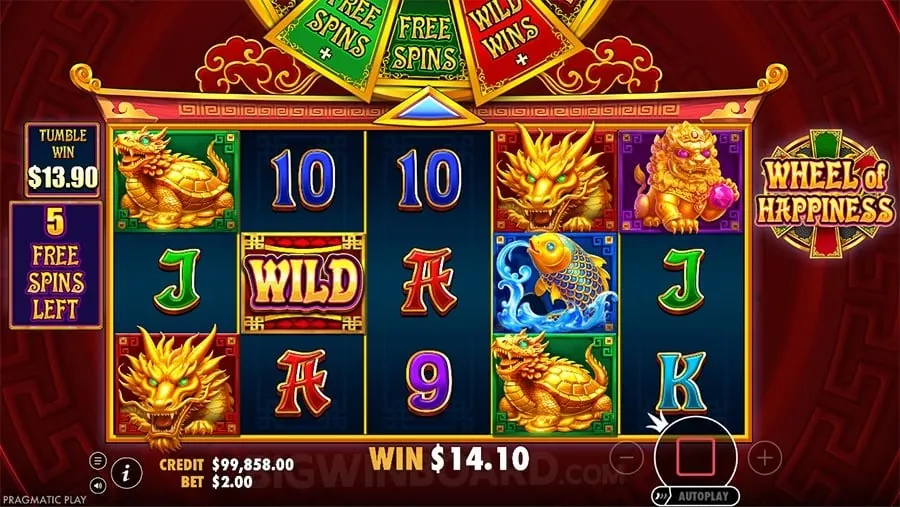
- Slots: While individual spins are independent events, understanding the concept of 'volatility' or 'variance' in slots from providers like PS Gaming and Wolf Gaming is crucial. High volatility slots offer less frequent but larger wins, while low volatility slots offer more frequent but smaller wins. This ties directly into your bankroll management strategy.
By applying these probabilistic insights, you move beyond mere chance and engage with the game on a deeper, more strategic level. Check out our wide array of games from Gaming Providers and put your skills to the test.
Understanding House Edge and Return to Player (RTP)
For advanced players, 'House Edge' and 'Return to Player' (RTP) are two sides of the same probabilistic coin. They are critical metrics that define the long-term profitability of any casino game.
- House Edge: This is the casino's built-in advantage, expressed as a percentage of the player's initial bet that the casino expects to keep over the long run. For example, if a game has a 2% house edge, the casino expects to keep ₱2 for every ₱100 wagered over millions of plays. It's a direct result of the game's probabilistic design. Knowing the house edge helps you identify which games offer better long-term prospects.
- Return to Player (RTP): RTP is the inverse of the house edge, representing the percentage of all wagered money that a slot machine or casino game will pay back to players over time. An RTP of 96% means that, on average, ₱96 out of every ₱100 wagered will be returned to players.
Why are these important for advanced players? Because they are direct indicators of a game's underlying probability and fairness. Games with lower house edges (and thus higher RTPs) are generally more favorable for players in the long run. When choosing games from providers like VA Gaming or TP Gaming, always look for information on their RTP. This data is often publicly available and should heavily influence your game selection, especially in slots and video poker, where player skill doesn't influence the outcome as much as in table games.
Always prioritize games with competitive RTPs to maximize your potential returns over time. Explore our Casino section to find games with transparent RTP percentages.
Bankroll Management and Variance: Mitigating Risk with Probability
Even with a perfect understanding of probability, variance (the deviation from the expected outcome in the short term) can lead to significant swings. This is where advanced bankroll management, informed by probabilistic understanding, becomes indispensable for Online Betting.
- Understanding Variance: High variance games (like some slots or high-stakes poker) have a wider spread of outcomes, meaning you might experience long losing streaks followed by large wins. Low variance games (like Baccarat or Blackjack played with basic strategy) have more consistent, smaller wins and losses. Your bankroll needs to be robust enough to withstand the expected variance of the games you play.
- Kelly Criterion (Advanced): For truly advanced players, the Kelly Criterion is a formula used to determine the optimal size of a series of bets. It suggests betting a fraction of your bankroll proportional to your edge and the odds. While complex to implement precisely in most casino settings, its underlying principle – never betting too much of your bankroll on a single outcome, especially when the edge is small – is invaluable.
- Session Limits and Stop-Loss/Win Targets: Based on your understanding of probability and variance, set clear limits before you start playing. A stop-loss limit prevents you from chasing losses, while a win target helps you lock in profits. These limits should be realistic and reflect the typical swings of the games you are playing.
- Capital Allocation: Diversify your gaming. If you enjoy high-variance slots from AP Gaming, balance it with lower house-edge table games. This probabilistic approach to capital allocation helps smooth out overall returns.
Effective bankroll management isn't just about discipline; it's about making probabilistic assessments of risk and reward to ensure longevity in your gaming journey. Secure your funds using trusted payment methods like GCash, Maya, BPI, and UnionBank when managing your bankroll on y82.
Game Selection: Choosing Titles with Favorable Odds
For the discerning player, selecting the right game is a strategic decision rooted in probability. Not all Casino Games are created equal when it comes to odds and player advantage.
- Table Games vs. Slots: Generally, table games like Blackjack, Baccarat, and certain variants of Video Poker offer significantly lower house edges than most slot machines. This is because many table games involve an element of skill and decision-making that can influence the outcome.
- Specific Game Variants: Within each game category, variants exist with different rules and, consequently, different house edges. For example, European Roulette has a lower house edge than American Roulette due to the absence of the double zero. Always research the specific rules and associated probabilities of the game variant you choose.
- Utilizing Bonuses and Promotions: While not directly probability, understanding how promotions interact with game probabilities is crucial. For example, a bonus with a high wagering requirement on a low RTP slot might be less valuable than a smaller bonus on a high RTP table game. y82 offers exciting Promo activities; understand their terms probabilistically.
- Progressive Jackpots: While the probability of hitting a progressive jackpot is extremely low, the expected value can become positive when the jackpot reaches a certain size. This is an advanced probabilistic calculation that few players undertake but can offer a significant edge.
By consciously selecting games with better odds and understanding the probabilistic landscape of each option, you significantly improve your long-term prospects. Dive into our diverse selection from providers like JDB Gaming and JILI Games, and make an informed choice. Ready to apply these insights? Register now and explore the possibilities!
Mastering probability in casino games is a continuous journey of learning and application. For advanced players, it's the difference between merely playing and strategically engaging. By understanding core concepts like expected value and house edge, applying advanced strategies to specific games, and managing your bankroll with an awareness of variance, you transform your approach to online betting. y82 is committed to providing a platform where informed players can thrive. We offer a vast selection of games from renowned Gaming Providers, secure payment options, and a mobile-first experience tailored for the Philippine market. Don't just play; play smart. Visit vip88-ph.com today, sign up, and elevate your gaming strategy!
Frequently Asked Questions
Question 1: Does understanding probability guarantee wins in casino games?
Answer: No, understanding probability does not guarantee wins. Casino games inherently have a house edge, meaning the casino has a mathematical advantage over the long term. However, understanding probability allows you to make optimal decisions, minimize the house edge, and manage your bankroll more effectively, thereby maximizing your chances of success and extending your playing time. It transforms playing from pure chance to a strategic endeavor.
Question 2: Which casino games offer the best odds for players based on probability?
Answer: Generally, table games like Blackjack (when played with optimal basic strategy), Baccarat (especially the Banker bet), and certain Video Poker variants offer some of the best odds for players, often having the lowest house edges. European Roulette is also better than American Roulette due to fewer zero slots. Slots, while entertaining, typically have higher house edges, though some modern slots from providers like Play’n GO offer competitive RTPs. Always check the specific RTP of the game you choose.
Question 3: How can I use RTP and House Edge information when choosing games on y82?
Answer: RTP (Return to Player) and House Edge are crucial metrics. A higher RTP (and consequently, a lower House Edge) indicates a game that theoretically pays back more to players over time. For advanced players, it's advisable to prioritize games with RTPs of 96% or higher, especially for slots. For table games, look for variants with the lowest possible house edge. This informed selection directly impacts your long-term expected returns. You can often find RTP information within the game's info section or by checking the provider's website.
Question 4: Is card counting an effective strategy for online live casino games?
Answer: Card counting is primarily effective in land-based casinos with physical card shoes that are not frequently shuffled. In Online Betting live casino games, many providers use continuous shuffling machines (CSMs) or shuffle the deck after every hand or a few hands, which renders traditional card counting strategies ineffective. While understanding the probabilistic principles behind card counting is valuable, its practical application in online live dealer blackjack is often limited by these technological implementations.
Question 5: What role does variance play in my probability-based strategy?
Answer: Variance describes the short-term fluctuations in outcomes that deviate from the expected long-term probability. Even with a positive expected value, high variance can lead to significant losing streaks or winning streaks in the short term. For a probability-based strategy, understanding variance helps you set appropriate bankroll management limits. High-variance games require a larger bankroll to withstand swings, while low-variance games allow for more consistent play. It's crucial to align your bankroll and risk tolerance with the variance of the games you choose.